
Soap Operas:
A Guiding Light for Handling Characters During Play
Revised 3/2026
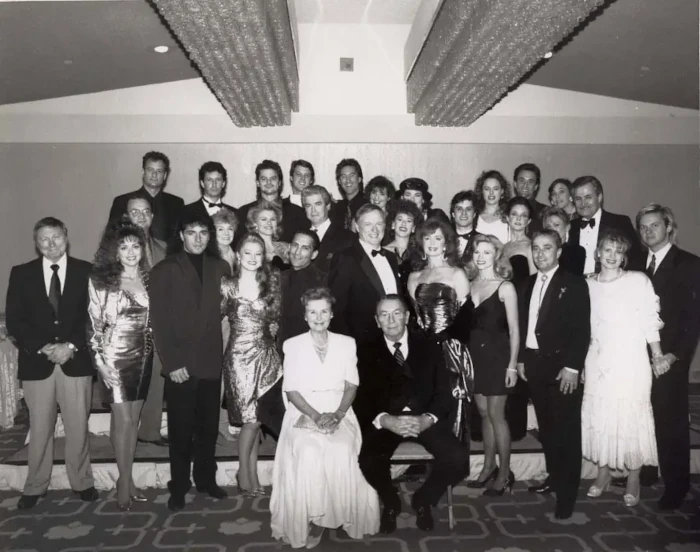
"days of our lives cast (1990)" (resized) by mtnbikrrrr (resized) is licensed under CC BY-NC-ND 2.0
Direct the Spotlight
Most soap operas have a large stable of major and minor characters, often in groups known as core families. In U.S. soaps (the ones with which I'm most familiar), episodes highlight front-burner characters and their storylines on different days. Back-burner characters are skipped over or only have brief scenes but eventually get their turn in the spotlight. As story arcs gain or lose steam, characters switch between front and back-burner status.
Planning some spotlight time before a tabletop roleplaying session is a good idea. In many fantasy games, player characters work toward goals together much of the time. Giving one or two PCs brief personal moments can break the routine and develop their relationships and interests. In later sessions, other player characters can get their turns. As long as they're brief and everyone gets their moments, they should be welcome.
While this can be easy to fit in during downtime, personalized scenes can happen just about anywhere. An unexpected conversation in town, a semi-private moment at a gathering, even a chance encounter in a shop can work. The trick is to use spotlight times to develop the front-burner character. Deliver rumors and updates; have NPCs question moves and motives. These scenes also offer unique ways to deliver plot hooks for the whole party. Instead of consulting the quest board in a tavern, meeting an NPC in the stables at midnight can make it feel like more is at stake and anything could happen next.
Be Prepared to Recast Roles
One way soaps differ from other series is their willingness to recast a role whenever they have the need. Regardless of popularity, just about anybody can be recast at any time. And changes are rarely announced ahead of time. Instead, a new actor takes over a character one day, everyone responds to them accordingly, and the story goes on. Fans aren't always thrilled at first and may carry torches for their favorite actors, but most adjust eventually.
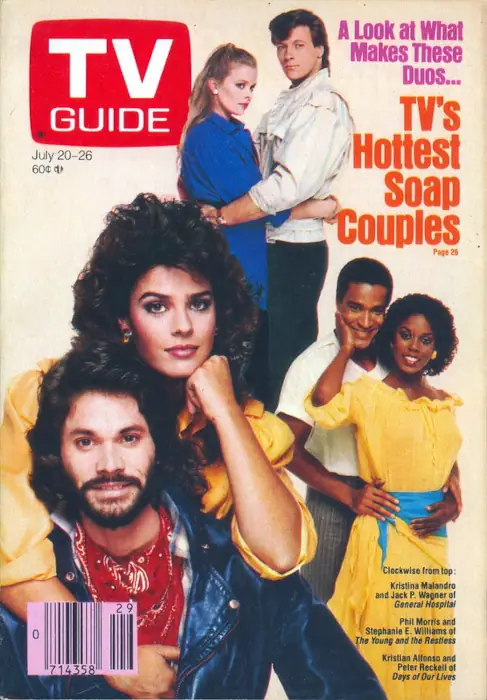
"TV Guide #1686" by trainman (resized) is licensed under CC BY-NC-ND 2.0
For instance, I grew up watching the great soap opera power couple, Bo and Hope Brady (featured prominently on the cover of TV Guide above). Peter Reckell was Bo from 1983 to 1992. Even though Bo was one of the most popular characters on the series, he was replaced with Robert Kelker-Kelly from 1992-1995. I had a great attachment to Peter, but I gave Robert a real shot and came to like his portrayal. But others stubbornly insisted that Peter was the only real Bo Brady, and he eventually did return to the role.
What does this have to do with tabletop RPGs? First of all, we all know that the characters who start a campaign won't always make it to the end. They might be killed in action, or a player could want to retire their first character and try another. Some players might have to leave the group for a session, intermittently, or for good. New players could join in the middle of epic story arcs. But if we use the soap opera model, none of that matters. The simple fact is that when casting needs to change, it doesn't have to wreck a character or a campaign.
Someone New
A new player and their character can be introduced in a fresh scene, but you don't have to wait for that if you don't want to. A character can be dropped in the middle of the action and with magic or technology, it can be easy to justify their sudden appearance at even the most remote location. GMs should make the group aware of this ahead of time, but it can get everyone playing sooner.
Someone Borrowed
If a player is curious about a new character, learning the ropes, or only joining the group for a short run, the GM can offer an existing NPC for them to use. This can be particularly helpful if the player isn't sure what they want to play or if they're going to like a certain character build. It can also be a good way to see how they gel with the group. All the GM needs to do is provide an outline of the NPC's traits and major goals and step in if the player takes the character too far afield. And if everyone's okay with it, the NPC could be taken on long-term.
If a player can't make it to a game session and everyone's on board, another player can take over their character. A GM should establish guidelines and restrictions first but as long as the player doesn't try to sabotage the character they're borrowing, they should be rewarded for participating as usual. It could be fun for the group to see a different take on a familiar face.
This model can also help when someone has to leave the group. If the player doesn't mind, their character can be taken on by another player regularly or become a special NPC the GM can use intermittently. If a player wants their old character to be retired, however, their wishes should be respected. Players can have strong feelings about their characters, since they're personal creations and avatars. There's no need to override their wishes: if the character was integral to the lore of the setting, they can be replaced by a similar NPC.
Someone Blue
In all recasting situations, if the experiment doesn't work out, changes should be made. A player can always move on to another character. If that isn't desired, the results can be rewritten or ignored. Soap operas adjust the past when necessary, and not everything that happens to a character has a lasting influence. Some events are mentioned later, but even a dramatic twist of fate can fade away as if it had never happened. Sometimes, it's better for everyone to say it never did.
Introduce New Characters Conspicuously
New characters aren't introduced often on soap operas, so when they are, everyone goes out of their way to make it count. In tabletop games, this could mean revealing them during an emergency or combat, but the situation doesn't have to be dramatic for them to make an impression. Wherever and whenever new characters show up, soaps remind us to make what they say and do noteworthy.
GMs can help this along in a few ways during their first scene:
Give the new character a little extra spotlight time.
Have the player briefly describe ways their character stands out.
Find a plausible way to reveal a tie the character has to the setting - or another character in it - if no one else does.
Encourage the player to develop a few secrets for their character, one of which they should want to keep from the other PCs at almost any cost.
Refer to one of their secrets briefly and indirectly when they least expect it.
The shining allure of someone new is often contrasted with the shadows surrounding them. This usually happens when information tied to their secrets and motives comes up in the scene and they try to play it off. Even if they're a good liar, small tells will occur and fans will notice there's more to them than what they want others to see.
In tabletop games, it can help to avoid things that make player characters dislike or distrust a new arrival. One way this can be done is by tying a new character to groups or individuals the PCs already like and trust. Another way is by having the character reveal non-aggressive emotions, humor, or vulnerability during their first scene. These are hints that they can be trusted, even if they have secrets, and that it's okay for strangers to come off a bit strange, especially at first.
Let Legacy Characters Be The Next Generation
A legacy character is born on a soap opera series. They usually make their first appearances as infants and are shown growing up in brief appearances over time (and as a slightly older actor takes over the next phase). They get more screen time if they're in a core family and/or the offspring of iconic characters, but they're only shown so much when they're kids. (Most of the time, child characters don't stay small for long. The timeline of the series is bent so they become teens fast and can become the center of their own intrigues. This is amusingly known as Soap Opera Rapid Aging Syndrome, or SORAS.)
Fans get invested in watching generations of a family rise and fall, so legacy characters feature prominently in the development of a series. While brand-new characters are added from time to time, legacy characters become fixtures of the setting. They carry on family names and reputations, feuds and responsibilities, as they were born to do. And once they're old enough, writers can bring them into the mix anytime, even if they've been waiting in the background for years.
Legacy Characters in TTRPGs
This can be a powerful addition to tabletop roleplaying campaigns, even if your game doesn't feature romances. As a GM, mention new births and show young kids in the background with NPCs. If PCs can have relationships and children, offer moments with them at intervals. As a player, inquire about characters' children from time to time. This will build a lineup of legacy characters to choose from later on.
In many campaigns, the group is going to shy away from featuring child characters in most scenes, for many reasons. But GMs have more options for dealing with this than soap writers do.
Use SORAS
If the group is good with it, Soap Opera Rapid Aging Syndrome can be used to age legacy characters in bursts until they reach a stage everyone is comfortable with. But in TTRPGs, the timeline doesn't have to be bent or retconned for this to happen. Magic and technology can easily provide plausible reasons for faster development. Be careful about how much drama centers on this change, though. Audiences can quickly resent rapidly aged children of their favorite characters, especially when those children are antagonistic to their parents.
Skip Time
Advancing the timeline of a campaign is another worthy option. If the group likes the idea, figure out a number of months or years of downtime to skip over together. Then the GM can ask players for a few key projects their characters would pursue in that time and sum up how it went. This is ideal at the end of major story arcs, when characters probably want to relax for a while.
Allowing a campaign to cover years of time in-game can be richly rewarding for everyone. Everyone gets to see how characters, groups, and locations develop over time and stories can take on a broader scope. If it sounds like fun, players can retire their original characters and take over legacy characters, including the offspring of their old PCs. But even if they don't, they'll encounter other legacy characters via NPCs. This is how family sagas are built, and the family saga is one of the most potent storytelling aspects soap operas offer.
Let Characters Move On
Sometimes a character leaves the area and fans are forced to let them go, at least for a while. They may meet with loved ones to say goodbye and take care of some loose ends, but they could just as easily slip away without revealing their plans. If they’re taken against their will, it won’t take long for the trail to go cold. There may be one-sided phone calls or other brief updates in future episodes or nothing but questions and silence. The more loose ends they leave behind, the more likely they’ll return, but it’s never a sure thing.
As with recasting, just about any character can be written off a soap opera at any time. This usually happens for a few main reasons, and each is worth some consideration.
To Cool Things Down
If a character has been on the front burner too often or too long, audiences may grow tired of them. On the flip side, fans may adore the character but the writers want to make space for others and since soap operas can have large casts, that isn’t always easy. Taking a well-worn character out of rotation gives everyone a break, and distance can make the heart grow fonder. By the time they return, characters are likely to have fresh looks and schemes and a cadre of fans who are thrilled to see them again.
To Shake Things Up
Whenever a character goes missing for an extended period, it’s bound to garner interest. Did they run away or fake their own death? Were they abducted and imprisoned? Will they be found or will their whereabouts remain a mystery? No one knows, but plenty of fans and other characters on the show will want to find out. If they aren’t recovered, the series will move on but fans will wonder when they might return and keep tuning in, just in case they do.
To Terminate Off-Screen Issues
Sometimes characters just don't work out and a show doesn't want to deal with them further. Perhaps a character flopped with audiences hard or there was a sudden, major problem with an actor. If it isn’t too difficult, a quick departure might be shown or referred to in brief dialogue. If a farewell isn’t worthwhile, the character will simply be erased and the show will proceed as if they'd never existed. This can be hard on an audience's suspension of disbelief at first but can also bring a sense of relief to fans or those behind the scenes.
Making Space in Your Game
Tabletop GMs can help players by letting them know they can cycle characters out if they need to, and players can help GMs by letting them know they need to play someone else. And while no one wants to write major characters out of a game every other week, there’s no reason to trap a reasonable player with a character they don’t want to portray. Players shouldn’t always be expected to kill their characters just to get a break, and GMs shouldn’t be expected to orchestrate a complex mystery around each departure. Letting characters recover over time, visit loved ones, or tend personal projects can be all it takes.
If things go terribly wrong with a character or player, having the option to swiftly shuffle a character out can help ease tensions in the group. Rather than killing an offending character in-game, with prejudice, it may be better to excise them from the universe. This is less likely to stoke a group’s resentment and bad memories.
Finally, having non-player characters exit the stage from time to time can make them even more interesting. It’s easy for it to seem like NPCs will remain in stasis until the player characters deal with them. Showing that they move on - whether the PCs are around or not - makes them seem more like real people. Giving a beloved NPC an emotional send-off can make players appreciate them all the more, as well. For long-running campaigns with large casts, moving some NPCs out of rotation can offer a GM some relief and make room for other characters.
But don’t worry. As we’ll discuss soon, characters in soaps and games don’t have to be gone forever.
<< Soap Opera Character-Building Soap Operas, Gaming, & Death >>