
What Soaps Teach about Building Characters
Revised 3/2026
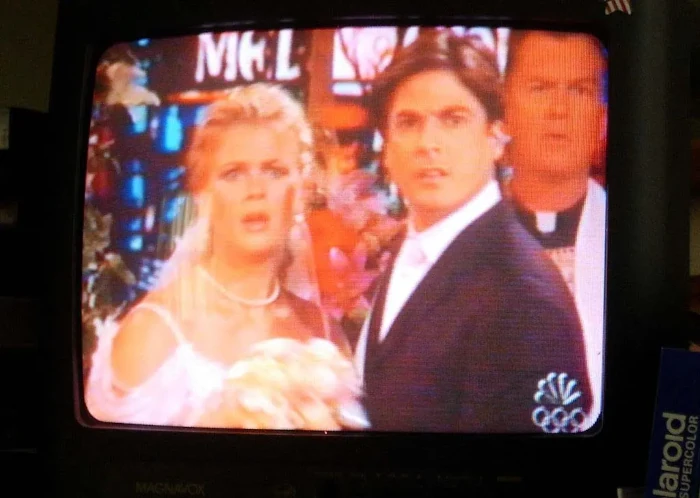
"Watching 'Days of Our Lives' on Tape" (resized) by CaptPiper (resized) is licensed under CC BY-NC-ND 2.0
Behold Sami Brady and Lucas Roberts from Days of Our Lives! They're great examples of many features we'll cover here. Sami is a legacy character who was born on the show, Lucas showed up when they were teenagers, and they're both members of 2 core families. They started out as co-conspirators: Sami wanted her sister Carrie's boyfriend, Austin, and Lucas wanted Carrie, so Sami and Lucas joined forces to break up the supercouple. However you felt about them, they took risks, made things happen, and were engaging to watch. Over the decades (that's right, decades: they've been portraying these characters on and off since 1993), they became a supercouple, had kids, and went from villains to protagonists.
With characters this long-lived and distinct, soap operas are worth our attention; even if they aren't your cup of tea, you can make use of their best qualities.
Strong Personalities Matter
Every soap opera character has a few strong, stable aspects that distinguish them from everyone else. This is true for major and minor characters, although minor characters have less extreme traits. No matter what happens or how many years pass, these basic elements rarely change and continue to affect them, even if they do. For instance, villains will be haunted by their reputation and probably fall back into their old ways, even if they earnestly try to reform.
Most characters have the following package of details from the moment they first appear:
what they do (profession)
a unique appearance and style (favored colors, cuts of clothing, and bearing)
a modus operandi for dealing with others (confrontation, stealth, lying, etc.)
a secret in their history
a hidden goal (which is probably related to their secret past)
something mysterious about them (something in their expression, words, and/or bearing)
Soap audiences don't expect great shifts in personality; they stick around because they want to see how established characters react to new situations. Fans can count on the characters to be who they are in every situation but can never be sure of how far they'll go to get what they want. Instead of being boring, this creates consistency in stories that change from week to week.
Sound familiar? It should. Soaps and tabletop games share many of the same needs.
The Beautiful Ones Always Smash the Picture
Soaps feature people who are fascinating and influential, regardless of where they are or what they do. Even the most down-to-earth characters lead unusual lives with rare threats and opportunities. And yes, they're probably physically stunning, too. Maybe they're born gorgeous; maybe they're always perfectly styled. Either way, soap characters are fantasies made flesh and help us forget our humdrum normal lives for a short while.
Soap operas and TTRPGs invite us to explore what we find alluring and lean into it. Few game systems present hard restrictions on body types, colors, physical features, and genders, and many don't assign numerical ratings to appearance. So you can fall back on favorite types if you'd like, but there's every reason to exercise your imagination when you describe your character. Soaps show us we don't have to be embarrassed for wanting some wish fulfillment, and that attitude can be great for roleplaying games.
Let the beautiful ones take center stage - just leave room for a variety of tastes so everyone in the audience/group can enjoy their favorite flavors.
Romance Keeps 'em Coming Back
If you're looking for ways to add romance to your game, soap operas can show you how it's done. From childhood besties to enemies-to-lovers to old flames reignited, soap relationships run the gamut - sometimes in the same pairing! And actors showcase all the indicators of attraction, from subtle body language to direct banter. Taking just a few elements you're comfortable with and adding them to your performance can be helpful (though it's best to discuss romance and how it's shown with your group before you get into it).
Complications
Soaps also show us that life doesn't stop because people fall in love - and vice versa - but daily life and new love can complicate characters' lives in entertaining ways. Previous storylines continue even as attraction builds, and new lovers can distract from old obligations. Audiences want to see how love and lust will influence characters and storylines, whether toxic relationships will fail and wonderful bonds will prevail.
To keep romances engaging, consider the following:
Are feelings known to all parties?
Are there rivals for someone's affection?
Which obstacles get in the way of a couple being together?
What temptations arise for long-standing couples?
Which duties or schemes threaten to pull couples apart?
Which circumstances push people together?
This doesn't mean lovers should always be harried and miserable; even the most tumultuous soap relationships have some peaceful periods. But relationships rarely stay comfortable and settled for long before some new twist arises. The list of questions above can provide ideas for what might happen next.
Configurations
Soap operas feature some powerful configurations that can work in tabletop games, with some important caveats.
Love Triangles
When love triangles arise, trouble probably won't be far behind. But they can involve more than three people (like the example of Sami and Lucas, who formed a square with Carrie and Austen) and often involve more than loving feelings. And while obsession, resentment, and sadness can lead to intense scenes and engaging choices, they can also turn players off. Even a player who's okay with a love triangle may not want it to go too far or go on too long. If another player character or an important NPC becomes obsessive toward their character (or even worse, develops feelings out of character), it could sour social dynamics within the group. Communication during and outside of play time is advised to keep things harmonious. Focusing interactions on fun rather than harm between the characters can also help.
Power Couples
A power couple involves lovers who are powerful, fascinating, good looking, and independent in their own right. At the same time, they support each other and fill in each other's weaknesses. Together, their best traits are magnified; whenever they're together, they make scenes better. They're everything people want to have. NPC supercouples can (and arguably should) leave great impressions on players, who may start to root for them. If PC romances work out for a while in your games, the characters could discover that others see them as a power couple. This could mean they receive extra admiration - and envy.
Secret Couples
Secret affairs have a special thrill that doesn't have to be lost in tabletop games. Players can strategize and use their characters' skills to try to avoid being caught. Allowing brief scenes for this to play out can be entertaining, and it doesn't have to take long for a secret affair to make an impact. Something you have to watch out for in tabletop games is why the characters are keeping their trysts secret. It's one thing if they're hiding from disapproving families or trying to keep their romantic life to themselves, and it's another thing if they're cheating on other partners. While soap operas are rife with adultery, it can be a sensitive subject in a game so it should be discussed ahead of time.
Supercouples
Not every romantic pairing is a supercouple. A supercouple is known for dramatic storylines, enduring chemistry, and always returning to one another. Even when they spend time apart - and most seem to break up somewhere along the line - they can't get clear of each other. They became the focus of many soaps in the 1990s because the fans loved them, and everybody had their favorites. Their interactions always had more meaning than the lines they spoke, and you rooted for them to be together. They have a legendary sort of status on soap operas and can have the same in tabletop games.
Villainous Couples
Villainous couples can be a fun deviation from the norm that also gives the GM more to work with. Finding out the new bad guy in town has a romantic partner can be baffling for the whole party. Who would trust such a person? Are they really there of their own free will? Having an equally bad partner on the field means double the trouble for the PCs. A villain's lover might move against the PCs, too, but could have a very different modus operandi and resources. If a villainous couple enjoys other support - like belonging to an organization and holding public office - then bringing them down could take more than an open battle. It could mean having to attack their reputation and dismantling their backing first. This can offer a different kind of tactical thinking and build the setting, along with the characters.
Envy and Jealousy Make Great Sources of Conflict
Envy and jealousy are common and powerful motivations in soap operas. A character who seems to have it all can still feel overlooked, less than, or without the one thing they want most. Seeing other characters enjoy what they would like to have can lead to bitterness. If they're often compared unfavorably to someone else, like a sibling, they can develop deep resentment against a wide swath of characters. If that other person is also better received socially, it's bound to sting even worse. Eventually, they'll start to speak or act against those they envy - to make them pay, take them down a peg, and seize what's theirs.
Jealousy, on the other hand, is the fear that someone is going to take what's yours or someone you value is going to leave you behind. Either way, it's not about what you have, it's about what you stand to lose. I'm not talking about momentary feelings of possessiveness that can be rationalized or soothed away. No, soap operas are concerned with ongoing jealousy that eats away at a person's heart. Indulging in jealousy usually leads characters to paranoia, spying, and efforts to hold onto what they value. It can even become an addictive habit. The more desperate they feel, the more likely they are to hold on too tightly, making it more likely that a lover will pull away. The longer-lived and more intense jealousy is, the more toxic a relationship becomes.
For Antagonists
All of this can be excellent fodder for antagonists in roleplaying games. Player characters are likely cool, powerful, and resourceful people, which makes them targets for envious glances. Their families and friends could also become jealous of the time they spend away on adventures. These feelings can lead to schemes the PCs don't expect. Finding out who their haters and obsessive fans are might be bad, but finding out how far these people are willing to go will probably be worse.
For Player Characters
Playing an envious or jealous character can also be intriguing for those who have never done so before. Choosing something your character wants but won't easily get is a challenge, especially when they have access to magic. Considering how your character will use their influence to get or keep who they want can be intriguing but can also quickly become horrifying for others at the table. It can (and should) seem ugly to trick someone by making them believe a lie, but that's likely to only go so far. Overwriting an NPC's agency with magic or other unusual effects can be deeply distasteful and lead to dramatic results.
It's best if player characters aren't allowed to employ methods that dramatically change others' behaviors when it comes to relationships in TTRPGs. It's also a good idea for an envious or jealous character to direct their resentment toward NPCs, not the other player characters. All too often, groups suffer from arguments and break up because PCs turn on each other, and soap operas show us why: sabotage and stealing are invasive, belittling, and divisive. They reveal that the perpetrator has no respect for the victim, which is poison to a party. Even in games with evil characters and mature topics, discussion and guardrails are needed for these themes.
<< Managing Leadership Handling Characters During Play >>